Understanding Sleep Paralysis: Causes, Symptoms, and Science-Backed Coping Strategies
Waking Up and Not Being Able to Move? Here’s What’s Actually Happening.
You wake up, but something’s wrong. You can’t move your legs. You can’t speak. You can’t even open your eyes properly. It feels like something is holding you down, and panic starts flooding in. If this has happened to you, you’re not alone-and more importantly, you’re not in danger.
This is called sleep paralysis, and it’s one of the most terrifying things your brain can do to you. But here’s the good news: it’s completely harmless. It’s not a sign of illness, it’s not a mental breakdown, and it’s not a ghost sitting on your chest. It’s just a glitch-a temporary mix-up in the transition between sleep and wakefulness. Once you understand what’s going on, it stops being a horror movie and starts being a weird biological quirk.
Why Sleep Paralysis Happens
To get why this happens, you have to understand how sleep works. Your brain cycles through different stages, including REM sleep-the stage where you dream. During REM, your brain does something smart: it temporarily paralyzes your muscles. This is called muscle atonia, and it’s your body’s way of making sure you don’t actually act out your dreams. Without it, you’d be running, punching, and kicking in your sleep, and that would be a problem.
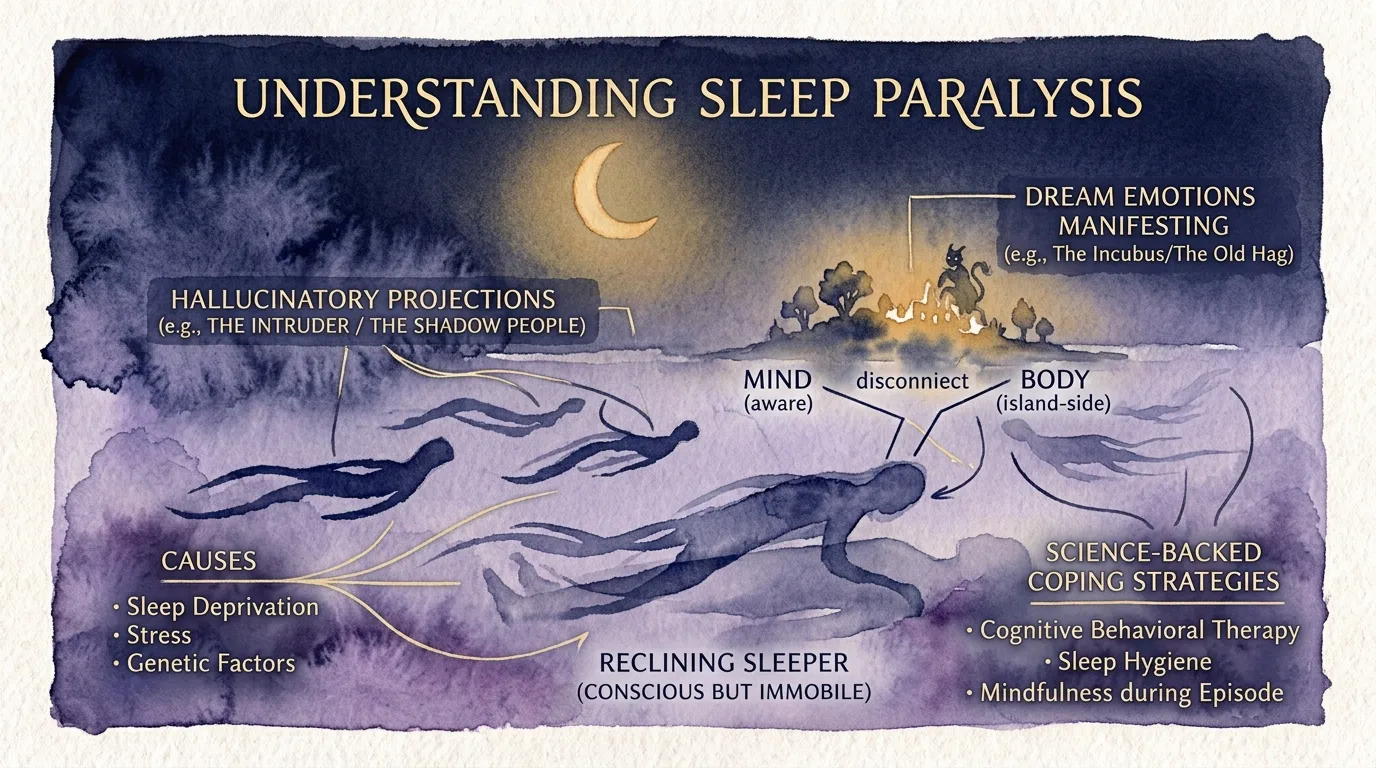
Sleep paralysis happens when that system gets out of sync. Basically, your mind wakes up before your body does. You’re conscious, you’re aware, but your muscles are still locked in REM paralysis. It’s like your brain flipped the “on” switch for your mind but forgot to flip it for your body. This can happen when you’re falling asleep or when you’re waking up, though the waking version is way more common.
What It Actually Feels Like
The main thing is obvious: you can’t move or speak. This can last anywhere from a few seconds to a couple of minutes. Your breathing keeps going-your diaphragm works on autopilot-but a lot of people feel chest pressure or like they can’t take a deep breath. That’s because your chest muscles are still paralyzed, and the sudden anxiety makes everything feel tighter.
And then there are the hallucinations. Oh boy. Sleep paralysis is famous for them, and researchers usually sort them into three types:
- Intruder hallucinations: You feel like there’s someone-or something-in the room with you. You might hear footsteps, whispering, or rustling.
- Incubus hallucinations: That classic feeling of pressure on your chest, like something’s sitting on you or holding you down.
- Vestibular-motor hallucinations: Floating, falling, spinning, or that weird out-of-body sensation.
These happen because your amygdala-the brain’s threat-detection center-is firing on all cylinders while you’re half-awake and half-dreaming. Your brain is trying to make sense of dream imagery while you’re fully conscious, and the result is straight-up nightmare fuel.
What Triggers It
Sleep paralysis can happen to anyone, but certain things make it way more likely:
- Sleep deprivation and messed-up schedules: Not sleeping enough, working night shifts, or dealing with jet lag throws your REM cycles out of whack, making these mixed states more common.
- Sleeping on your back: Studies show that lying flat on your back is linked to more episodes.
- Stress and anxiety: High stress messes with your neurotransmitters and fragments your sleep, making state confusion more likely.
- Substances and meds: Stopping certain medications (like SSRIs) or drinking alcohol close to bedtime can trigger something called REM rebound, which increases your chances of a mixed state.
Sometimes, recurring sleep paralysis is tied to narcolepsy. But for most people, it’s just an occasional, harmless thing that happens.
How to Handle It
You can’t always prevent sleep paralysis, but you can make it less frequent and way less terrifying.
First, get your sleep in order. Aim for seven to nine hours a night. Keep a consistent sleep schedule, even on weekends. Cut back on caffeine and screens before bed. Make your room dark and comfortable. Basically, treat your sleep like it matters-because it does.
If you’re in the middle of an episode, here’s what actually helps:
- Remind yourself you’re safe: Tell yourself it’s temporary. It will pass. Your breathing is fine. You’re not dying.
- Focus on tiny movements: Don’t try to move your whole body at once. Just try to wiggle one finger, one toe, or your tongue. Small movements often tell your brainstem to release the paralysis.
- Breathe slowly: Slow, steady breaths lower your heart rate and calm the panic.
Final Thoughts
Sleep paralysis feels awful in the moment, but it’s just a harmless hiccup in how your brain handles sleep transitions. It’s not supernatural, it’s not dangerous, and it’s not permanent. With better sleep habits and a calm mindset when it happens, most people find it becomes less frequent and way less scary over time.
So if you wake up and can’t move? Don’t panic. Just wiggle a finger. It’ll pass.
Frequently Asked Questions
What causes sleep paralysis?
Sleep paralysis occurs when your mind wakes up while your body remains locked in REM sleep muscle atonia. Common triggers include sleep deprivation, sleeping on your back, stress, and certain medications or alcohol.
What are the main symptoms of sleep paralysis?
The primary symptoms are a temporary inability to move or speak, chest pressure, and hallucinations such as feeling an intruder in the room, chest compression, or sensations of floating.
How do you stop sleep paralysis when it is happening?
During an episode, remind yourself that you are safe, take slow steady breaths, and focus on wiggling a tiny part of your body like a finger, toe, or tongue to signal your brain stem to release the paralysis.