How to Recognize Dream Signs: Developing Mindfulness Within Your Dreams
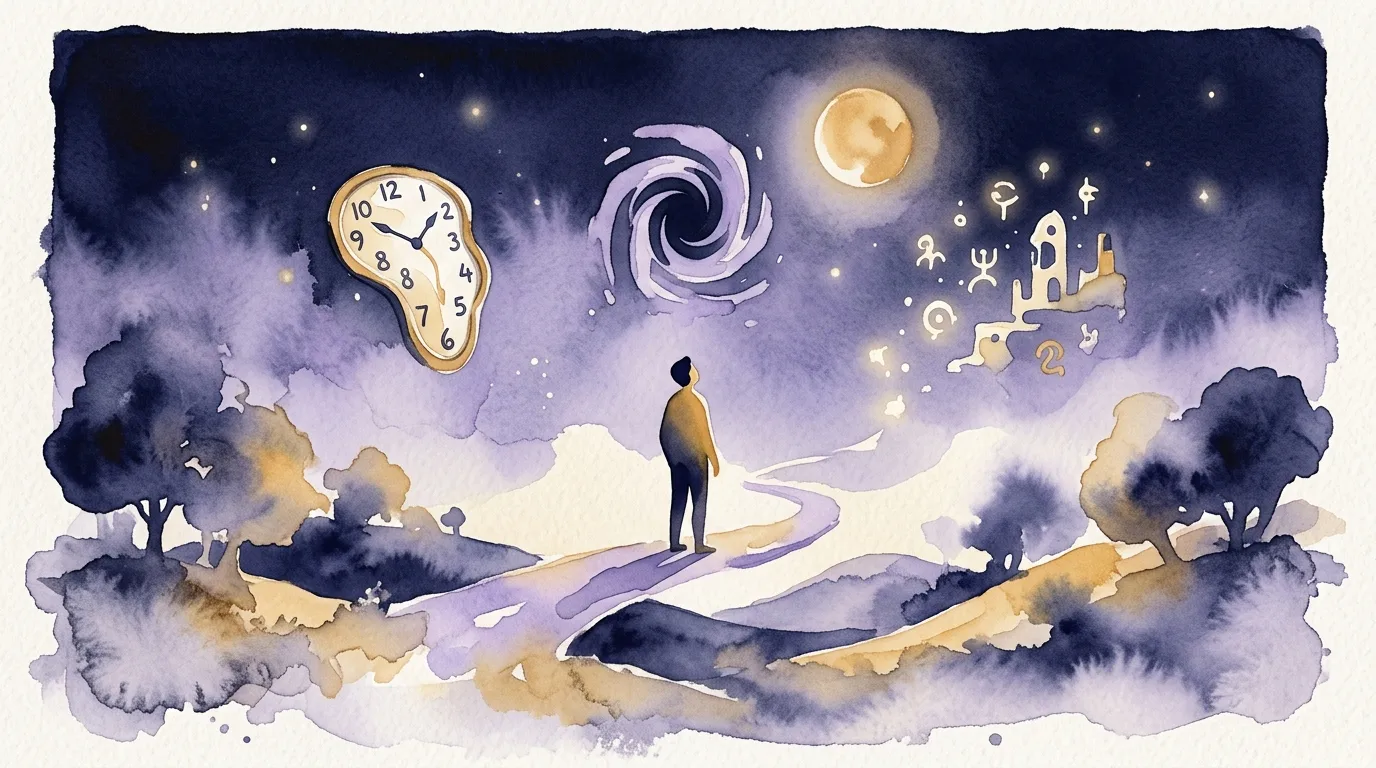
For centuries, philosophers and researchers alike have marveled at the brain’s ability to construct complex, immersive worlds during sleep-worlds that feel entirely convincing while they last. Yet, almost every dream contains subtle discrepancies, logical errors, or surreal elements that violate the laws of physics and daily reality. In dream science and lucid dreaming research, these anomalies are known as “dream signs.” Learning to spot dream signs is one of the most effective ways to cultivate dream awareness and foster metacognition during sleep.
What Are Dream Signs? Categories of Anomalies
A dream sign is any recurring element, theme, behavior, or environmental anomaly present during a dream that indicates you are not awake. Pioneer lucid dreaming researcher Dr. Stephen LaBerge categorized dream signs into four distinct primary domains:
- Inner Action: Unusual thoughts, feelings, or cognitive processes within yourself. This includes experiencing sudden shifts in mood without a clear cause, realizing you possess skills you do not have in waking life, or observing your own thoughts from a third-person perspective.
- Form: Abnormalities in the shape, size, or structure of people, objects, or surroundings. Examples include a five-story house having twenty floors inside, animals with incorrect physical features, or your own hands having extra fingers.
- Context: Elements that are physically normal on their own but placed in an impossible or highly improbable situation. Meeting a deceased relative, finding yourself in your childhood bedroom, or standing at your workplace while wearing pajamas are classic context dream signs.
- Awareness: Oddities related to your perception of time, space, or identity. Examples include telepathic communication, instantaneous travel from one continent to another, or acting as an entirely different persona.
The Role of Metacognition and Prospective Memory
Recognizing dream signs requires activating two key cognitive skills: metacognition and prospective memory.
Metacognition refers to “thinking about thinking”-the ability to critically examine your current state of consciousness and evaluate whether your surroundings make logical sense. During standard REM sleep, the dorsolateral prefrontal cortex-the region responsible for logical reasoning and critical self-evaluation-is largely deactivated. As a result, the mind accepts absurd dream events without question. Training metacognition during waking hours builds cognitive pathways that can carry over into the dream state.
Prospective memory, on the other hand, is the ability to remember to perform a planned action in the future (such as remembering to buy milk on the way home). In the context of dream awareness, prospective memory allows you to set an intention before sleep: “When I see a dream sign tonight, I will remember to recognize that I am dreaming.”
How to Identify and Catalog Your Personal Dream Signs
While some dream signs are universal, most individuals have personalized patterns that reflect their daily life, subconscious concerns, and imagination. To discover your personal dream signs, systematic tracking is essential.
- Maintain a Detailed Dream Journal: Keep a notebook or voice recorder right next to your bed. Immediately upon waking, record every detail you can recall from your dreams before sitting up or checking your phone. Pay special attention to settings, recurring characters, emotions, and unusual events.
- Conduct Weekly Audits: Once a week, review your dream entries and highlight recurring elements. Look for patterns: Do you often dream about being unable to find your car? Are you frequently near bodies of water? Do lights fail to turn on when you flip a switch?
- Group Signs into Categories: Create a list of your top three to five most frequent dream signs. Identifying these specific patterns makes your brain far more likely to recognize them when they appear during sleep.
Integrating Reality Testing into Daily Routines
Cataloging dream signs is only half the process; you must also train your mind to react to those signs with critical inquiry. This is achieved through systematic reality testing.
Whenever you encounter one of your personal dream signs-or anything unusual-in daily life, perform a physical and mental reality check. Do not simply assume you are awake; actively test your environment:
- Text/Clock Test: Read a sentence or check a digital clock, look away for three seconds, and read it again. In dreams, text and numbers almost always shift or become unreadable upon a second look.
- Palm Push: Gently press the index finger of one hand against the palm of your opposite hand while questioning if physical resistance is normal.
- Memory Check: Ask yourself: “How did I get here? What was I doing twenty minutes ago?” Dreams usually drop you in the middle of a scene without a logical backstory.
By linking these reality tests directly to your recognized dream signs during the day, you build a mental habit that automatically triggers during REM sleep.
Cultivating a Sustainable and Mindful Practice
Recognizing dream signs is a skill that develops gradually over time through patience and consistent effort. Rather than approaching the practice with rigid expectations, view it as a form of mindfulness training that enriches your connection to your sleeping mind. Over time, cultivating dream sign awareness leads to clearer dream recall, richer insight into subconscious patterns, and enhanced control over your nighttime experiences.
Frequently Asked Questions
What are dream signs?
Dream signs are recurring elements, behaviors, or anomalies in a dream that reveal you are not awake. They fall into four main categories: inner action, form, context, and awareness.
How do I identify my personal dream signs?
You can find your personal dream signs by keeping a detailed dream journal immediately upon waking, conducting weekly audits of your entries, and cataloging your most frequent recurring patterns.
What are common reality tests to check if you are dreaming?
Common reality tests include reading text or a digital clock twice to see if it changes, gently pressing a finger against your opposite palm, and reviewing your memory of how you arrived at your current location.