Does the Full Moon Really Affect Your Dreams? What the Science Says
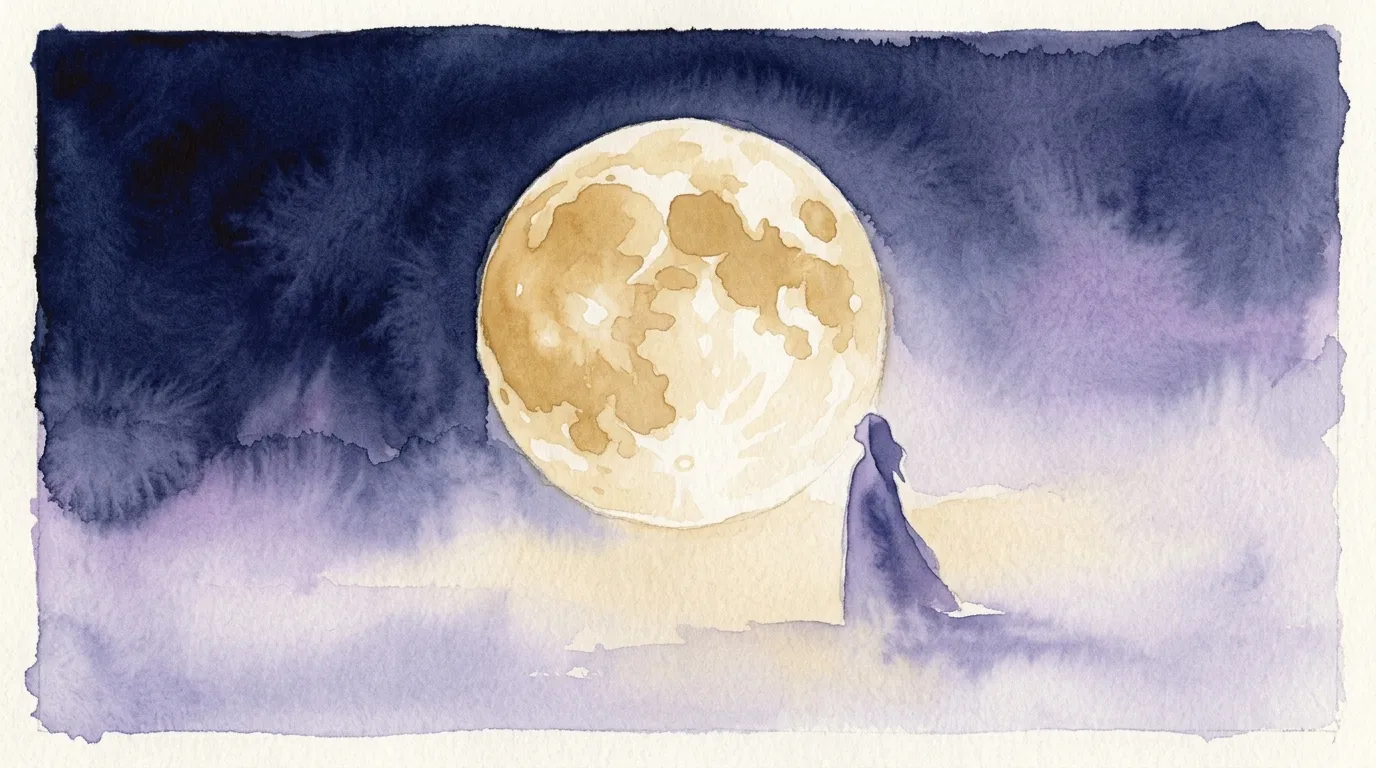
Long before sleep labs and EEG machines, people were already convinced the moon messed with their sleep. “Lunatic” literally comes from luna - the belief that the full moon could stir up madness and restlessness is centuries old. Modern sleep science hasn’t found anything that dramatic, but in the last decade or so, a handful of studies have found something narrower and more interesting: the full moon may not just disrupt sleep - it may change what you dream about.
Why This Idea Has Stuck Around For So Long
Before artificial lighting, the full moon was a genuinely disruptive presence - a bright light source on a roughly monthly cycle, active exactly when humans would otherwise be in total darkness. Some researchers suspect that a faint biological sensitivity to that cycle may be a holdover from a time when moonlight was one of the only things that reliably changed our nighttime environment. Whether or not that sensitivity still meaningfully applies in a world full of streetlights and screens is exactly what modern research has been trying to pin down.
What the Research Into Dream Content Found
Most moon-and-sleep coverage focuses on sleep quality - how well you slept, not what you dreamed about. Psychologist Richard Wiseman looked at a different question entirely: using self-reported dream journals, he found that in the week surrounding a full moon, people tended to describe their dreams as noticeably stranger than usual - not necessarily worse, just more unusual or vivid. It’s worth being clear about the limits here: this relies on people’s own descriptions of their dreams, not an objective measure, so it’s suggestive rather than conclusive.
The Sleep Science Behind It
Separately, a frequently cited study published in Current Biology (Cajochen et al.) measured people’s sleep directly in a lab setting, without telling participants the study had anything to do with the moon. Around the full moon, the researchers found measurable dips in deep sleep (lower EEG delta activity, the signal most associated with deep NREM sleep), lower evening melatonin levels, and it took participants longer to fall asleep. Sleep quality, as rated by the participants themselves, was also lower during this window. Since dreaming and REM sleep structure are closely tied to overall sleep quality, a dip in deep sleep could plausibly make dream content more fragmented or vivid, even if no study has directly proven that causal chain.
Does This Actually Apply to You?
Here’s the honest, unglamorous part: not every study agrees, and the effect sizes involved are small. Some research finds no meaningful link between moon phase and sleep at all, and sleep researchers broadly agree that everyday factors - stress, screen time, caffeine, an inconsistent bedtime - have a far larger effect on your sleep than the lunar cycle does. If you’ve never noticed anything unusual about your sleep around a full moon, that’s not a sign anything is wrong with you; the research suggests this effect, if it exists for you personally, is subtle rather than dramatic.
How to Find Out For Yourself
Since the existing research is genuinely mixed, the most honest way to know whether this applies to you is to simply track it. Full moons happen roughly once every 29.5 days, so over a couple of months you can build a real, personal dataset: log your dreams the few nights before, during, and after each full moon using our free Dream Journal, and compare them to a few random nights elsewhere in the cycle. You may find a pattern - or you may find none at all, which is itself a useful (and common) answer.
The full moon probably isn’t turning you into a different dreamer every month. But the idea that it might nudge your dreams toward something a little stranger than usual is, at the very least, no longer pure folklore - it’s a real, if modest, research question that science is still working through.
Frequently Asked Questions
Does the full moon actually affect sleep?
Some studies have found small but measurable changes around the full moon - including reduced deep sleep and lower melatonin levels - though the effect size is modest and not every study agrees.
Do dreams get weirder during a full moon?
Psychologist Richard Wiseman's research found that dream content tends to be reported as noticeably stranger in the week surrounding a full moon, though this research relies on self-reported dream journals rather than objective measurement.
How can I find out if the moon affects my own dreams?
The only reliable way is to track your own dreams over at least one full lunar cycle and compare entries from full-moon nights to other nights - general research findings don't necessarily predict your individual experience.