False Awakenings: Why You Dream About Waking Up and How to Understand Them
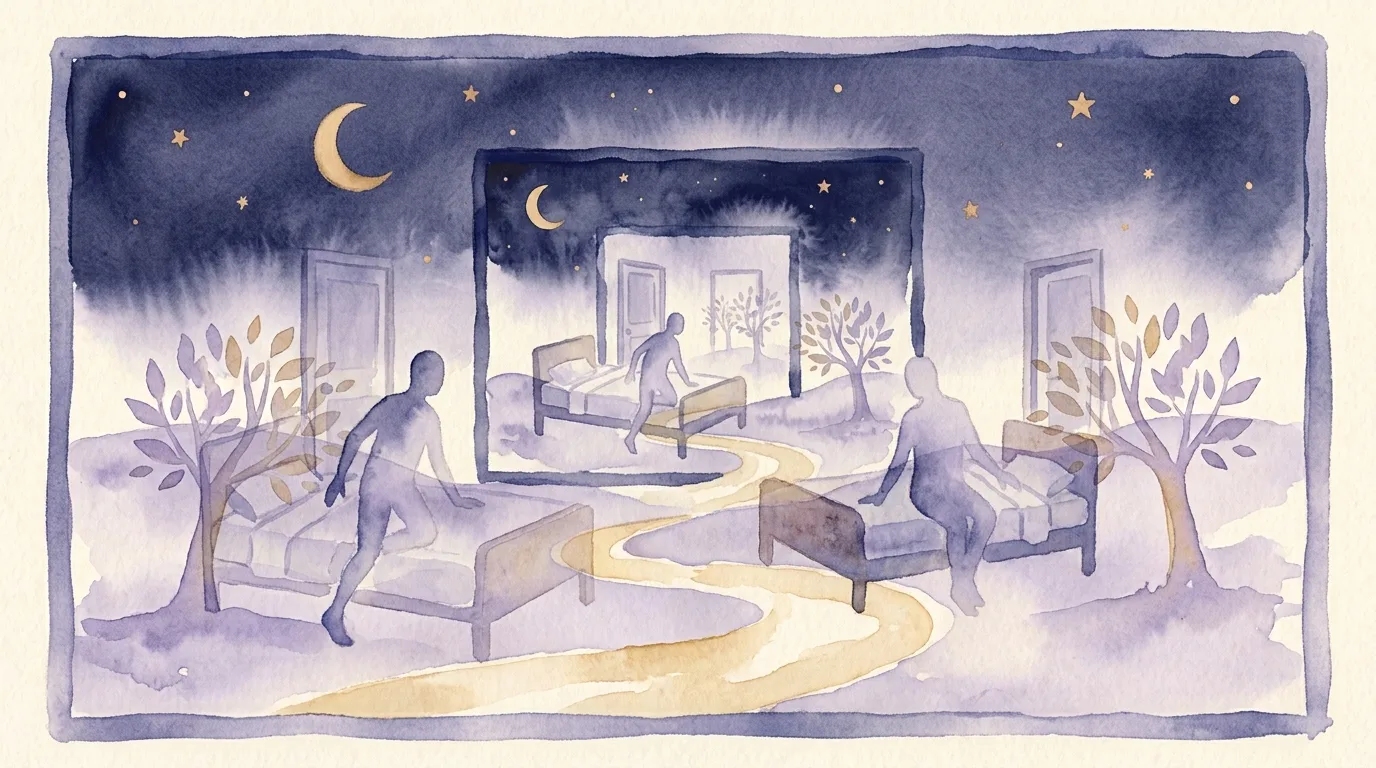
False Awakenings: When You Wake Up (But Not Really)
You wake up to your alarm, swing your legs out of bed, brush your teeth, and head to the kitchen for coffee. Everything feels normal - until you notice something weird. The clock is showing symbols you don’t recognize, or a light switch doesn’t work. Then, suddenly, you actually wake up - and realize that your entire morning routine was just a dream.
This is called a false awakening. It’s a strange but surprisingly common experience where your brain tricks you into thinking you’re already awake and going about your day. And the wild part? It can be so vivid and detailed that you’d swear it was real.
Two Types of False Awakenings
Dream researchers usually group false awakenings into two main categories, based on how they feel:
-
Type 1 (Realistic and Routine): This is the most common type. You wake up in your actual bedroom, everything looks normal, and you go through your usual morning routine - maybe checking your phone, brushing your teeth, or making breakfast. Nothing feels strange until something small doesn’t add up, and then you actually wake up.
-
Type 2 (Atmospheric or Unsettling): In this version, the dream feels off from the start. The room might be darker than usual, the air feels heavier, or there’s a creeping sense of tension. You’re not sure what’s wrong, but something is. When you finally wake up for real, it’s a relief.
Some people also experience loops - where they wake up over and over again inside the dream, each time thinking they’re finally awake, only to “wake up” again. It can feel like being stuck in a maze, but it’s usually harmless.
Why Do False Awakenings Happen?
Sleep researchers are still figuring out the exact mechanics, but they generally view false awakenings as a glitch that happens during REM sleep. Normally, the parts of your brain that handle self-awareness and logic are mostly offline while you dream. But in a false awakening, those areas partially wake up - while your brain is still dreaming.
A few things seem to make false awakenings more likely:
- Morning stress or routine anxiety: If you’re worried about waking up on time, or you’ve got a lot on your plate, your brain stays on high alert - sometimes high enough to simulate waking up.
- Sleep interruptions: Waking up briefly during the night - from noise, light, or conditions like sleep apnea - can make the transition between sleep stages messy.
- Vivid dreaming: When your dreams are unusually clear and detailed, your brain can build such a realistic version of your bedroom that you mistake it for the real thing.
The Link to Lucid Dreaming
False awakenings and lucid dreaming go hand in hand. In fact, false awakenings are often a stepping stone to lucidity - because you’re already in that in-between state where your brain is partially thinking clearly.
If you notice something odd during a false awakening - like text that changes when you read it twice, or a light switch that doesn’t work - that “aha” moment can turn the dream into a full-blown lucid dream, where you know you’re dreaming and can start to steer things.
On the flip side, false awakenings often happen right after a lucid dream. If you’re dreaming and decide to wake yourself up, your brain might just transition into a false awakening instead - tricking you into thinking you’re actually awake, when you’re still asleep.
What to Do If You Get Stuck in a Loop
A false awakening now and then is no big deal. But if you get stuck in a loop - waking up over and over inside the dream - it can leave you feeling drained and frustrated. Here are a few ways to handle it:
-
Do a reality check every time you wake up: Get into the habit of testing reality the moment you open your eyes in real life. Look at a clock, read a line of text twice, press your hand against a solid surface. If it becomes second nature, you’ll automatically do it in a dream - and you’ll catch the false awakening sooner.
-
Stay calm: If you realize you’re stuck, don’t try to force yourself awake by thrashing or fighting it. That just ramps up your anxiety. Instead, pause, take some slow mental breaths, and remind yourself you’re perfectly safe in bed.
-
Roll with it: Once you know it’s a dream, you can actually have some fun with it. Explore your dream bedroom, change the environment, or use it as a chance to practice something creative. It’s your dream - you can do whatever you want with it.
The Bottom Line
False awakenings are like a glitch in your brain’s software - confusing, maybe a little unsettling, but totally normal. They happen when your brain gets mixed signals between sleep and waking. And once you understand what they are and why they happen, they stop being scary and start being… kind of fascinating.
Next time you “wake up,” check that clock twice. You might just be dreaming.