False Awakening Dreams: Why You Get Stuck in Dream-Within-A-Dream Loops
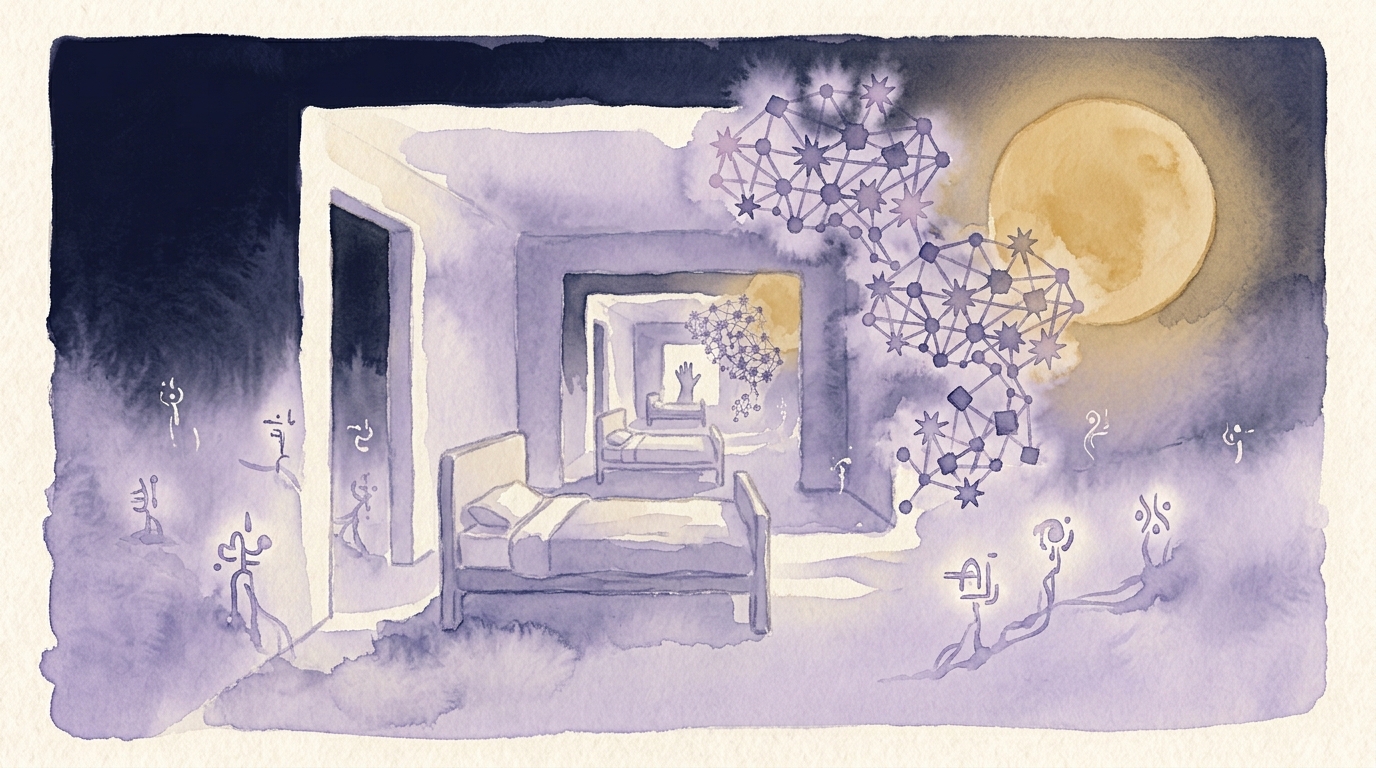
You wake up, get out of bed, maybe start your morning routine - and then you actually wake up, realizing none of that happened. You were still dreaming the whole time. This is a false awakening, and if it’s ever happened to you more than once in the same “morning,” you’ve experienced what’s often called a dream loop.
What Is a False Awakening?
A false awakening is a dream in which you believe you’ve woken up from sleep, when you’re actually still asleep and dreaming. It often replicates your real bedroom, your real routine, even small realistic details - which is exactly what makes it so convincing until something breaks the illusion.
The Difference Between False Awakenings, Sleep Paralysis, and Lucid Dreaming
These three get grouped together often, but they’re distinct experiences. Sleep paralysis involves being consciously aware while your body remains physically unable to move - a mismatch between mind and body during the transition out of REM sleep. Lucid dreaming means knowing you’re dreaming while still inside the dream, sometimes with the ability to influence it. A false awakening is different from both: you believe you’re genuinely awake, with no sense that you’re still dreaming, and typically no paralysis involved at all.
Type 1 vs. Type 2 False Awakenings Explained
Dream researchers generally describe two forms. A Type 1 false awakening is fairly ordinary - you dream of waking up and going about a normal routine, and the dream ends when you actually wake up, often without anything unusual happening. A Type 2 false awakening tends to be more unsettling: the dream-bedroom feels slightly “off,” charged with tension or dread, sometimes accompanied by strange sounds or a sense that something is wrong - closer to a nightmare than a neutral replay of your morning.
Why Do You Keep Waking Up Inside a Dream?
False awakenings tend to cluster around a few specific conditions rather than happening completely at random.
Sleep Deprivation and REM Rebound
When you’re sleep-deprived, your body often compensates with longer, more intense REM periods once you finally do sleep - sometimes called REM rebound. Since dreaming (and false awakenings specifically) is tied to REM sleep, this rebound effect may make loop-like dreams more likely on nights following poor sleep.
High Stress and Anxiety Levels
Elevated stress keeps the mind more active even during sleep, which is generally understood to increase the odds of vivid, unusual dream content - including false awakenings. It’s a similar mechanism to why anxious periods often bring more memorable or intense dreams overall.
Environmental Triggers and Micro-Arousals
Small disruptions - a partner shifting in bed, a sound outside, a change in room temperature - can cause brief micro-arousals that don’t fully wake you but nudge your brain toward a lighter sleep stage. Waking up “inside a dream” often coincides with these partial arousals, where your brain starts constructing a waking scenario before you’ve actually surfaced.
Psychological & Symbolic Meanings of Being Stuck in a Dream Loop
Beyond the mechanics, a recurring false awakening loop often has something to say about what’s going on in waking life.
Feeling Unprepared for Waking Life Responsibilities
A dream where you keep “waking up” but never actually get to start your day may reflect a sense of not being ready to face what’s ahead - a deadline, a conversation, a responsibility you’ve been putting off.
Imposter Syndrome and Self-Doubt
Because false awakenings often replay the appearance of being awake and functional without the reality of it, they can echo a broader feeling of “performing” competence you’re not sure you actually have - a dream-logic version of imposter syndrome.
Fear of Losing Control or Being Trapped
The loop itself - waking up, only to find you’re still asleep, again and again - can mirror a waking feeling of being stuck in a situation you can’t seem to exit, whether that’s a routine, a relationship, or a cycle of a different kind entirely.
How to Break Out of a False Awakening Loop
If you’re in the middle of one and want out, a few techniques are commonly used by people who experience these often.
Perform Immediate Reality Checks (The Finger-Through-Palm Technique)
The moment you suspect you might still be dreaming, try pressing a finger into the palm of your other hand. In a dream, it often passes through or feels distinctly “wrong” - a fast, physical way to test reality without needing anything elaborate.
Focus on Small Physical Movements (Wiggling Your Toes)
Deliberately trying to wiggle your toes or fingers is a technique some people use to help transition out of a dream state - it draws your attention to a small, concrete physical sensation, which can help anchor you toward actual waking.
Calming Your Breathing to Signal Your Brain
Slow, deliberate breathing - even within the dream - is sometimes reported to help ease the transition out of a loop, likely because it mirrors the physiological state associated with actual waking rather than continued sleep.
When to Seek Help: Could It Be a Sleep Disorder?
An occasional false awakening isn’t a medical concern. But if they’re frequent, distressing, paired with insomnia, or happening alongside symptoms like sleep paralysis or excessive daytime fatigue, it’s worth mentioning to a doctor or a sleep specialist - our support resources page has a starting point for finding one. Persistent, disruptive dream loops can sometimes be connected to broader sleep quality issues that are worth addressing directly rather than just managing the dreams themselves.
If you want to get better at noticing when you’re dreaming in the first place - which makes loops like this far easier to catch and break - our guide on how to lucid dream covers the reality-check habits that help most.
Frequently Asked Questions
Is a false awakening dangerous?
No. It can feel disorienting or unsettling in the moment, but false awakenings are a normal, harmless variation of dreaming, not a medical concern on their own.
How many times can a false awakening loop repeat?
There's no fixed number - some people experience just one, others report a handful of layered awakenings in a row before actually waking up.
Is a false awakening the same as sleep paralysis?
No. Sleep paralysis involves being consciously aware and unable to move; a false awakening is dreaming that you've woken up, usually without any paralysis at all.