What Americans and Brits Dream About, According to Search Data
Dreams about teeth falling out are among the most searched dreams in the US and the UK. A recent analysis of Google search data by Morning Life, a sleep site, compared the most searched dreams across countries. This article looks at the US and UK results, what they show, and what they cannot tell you.
US vs UK: Top Searched Dreams Side by Side
Figures are monthly search volume from the Morning Life analysis. They show how often people searched for each term, not how often they dreamed about it.
| Rank | United States | United Kingdom |
|---|---|---|
| 1 | Teeth falling out: 81000 | Teeth falling out: 41100 |
| 2 | Snakes: 19400 | Snakes: 3500 |
| 3 | Ex-partners: 17000 | Hair-related dreams: 2,300 |
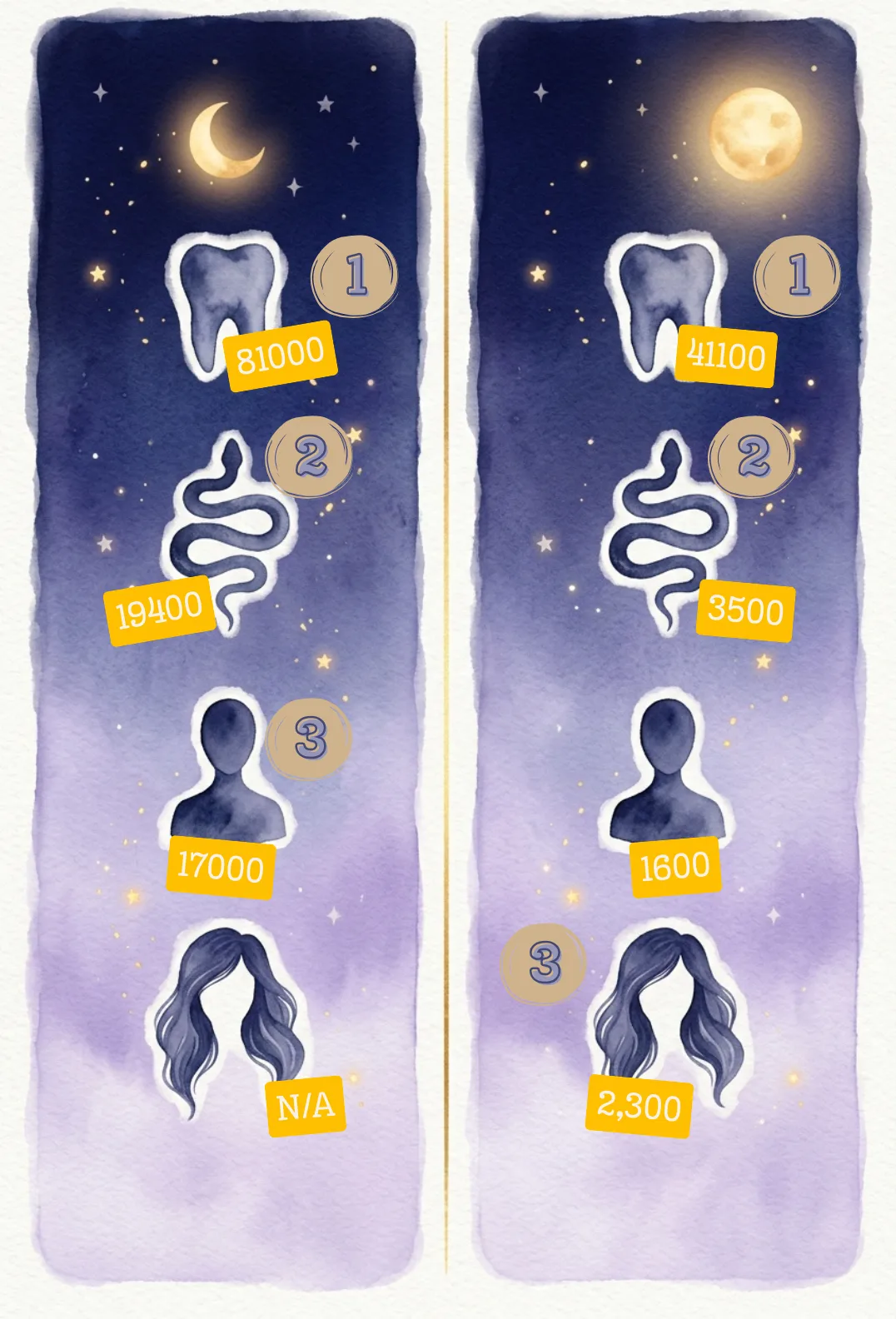
Based on search data (Morning Life). Searches reflect curiosity, not dream frequency.
What the Data Measures
The analysis counted how often people searched for specific dream terms in each country. It did not survey people about what they dreamed. A search for “teeth falling out dream” usually means someone had that dream and wanted to know what it meant. That makes search data a useful signal of curiosity and concern, but a poor measure of how common a dream is.
Before reading the lists, keep three limits in mind. Search terms can differ in wording, so one dream may be split across several queries. Search volumes change over time. And a country’s language and search habits shape what gets typed, which affects the ranking.
The Most Searched Dreams in the US
The top three in the US, as reported by the analysis, were:
- Teeth falling out. The most searched dream by a wide margin. See our teeth falling out interpretation for the common readings.
- Snakes. Also a major search in the US. Read more in our snake dream guide.
- Ex-partners. Dreams about an ex appear at number three. Our ex dream guide covers the most common scenarios.
The Most Searched Dreams in the UK
The UK list shares the top two with the US. Teeth falling out is first and snakes are second. The third place differs: the report notes hair-related dreams, not ex-partners. Check the exact query wording in the original report before quoting it.
Our hair falling out article covers the common readings for that theme.
What Is Similar and What Is Different
The overlap is clear: teeth and snakes top both lists, and both are common themes in dream content studies. The difference in third place is more interesting, but it is only one position in one dataset. Without the full top ten and the search volumes for each term, it is not safe to say what drives the gap.
Why These Dreams May Stand Out
Dream research suggests that dream content tends to reflect what matters to a person in waking life, a pattern known as the continuity hypothesis (see the Sources). Teeth and snakes are both vivid images that people remember and talk about, which may explain why they are searched so often. Interpreters also link them to health, control, and fear, but those readings are interpretive, not established findings.
What This Data Cannot Tell You
- It does not show how often people actually dream about teeth or snakes.
- It does not show whether dreams differ between the countries in content.
- It does not show why the third place differs.
For a fair reading, treat these lists as a snapshot of what people are curious about, not as a ranking of what people dream about.
Sources
- Morning Life (mornings.co.uk), “The Most Common Dream in Every Country,” Sarah Anderson. Перевірте оригінальну сторінку: дату збору даних і точні топ-10 для кожної країни.
- IFLScience, “These Are The Most Common Dreams, According To Google Data.” Вторинне джерело, використано для перевірки цифр про змії в Бразилії та Туреччині.
- Domhoff, G. W. (2003). The scientific study of dreams: Neural networks, cognitive development, and content. American Psychological Association.
Frequently Asked Questions
What is the most common dream in the US and UK?
Based on search data compiled by Morning Life, dreams about teeth falling out are the most searched dream in both the US and the UK. Searches are a proxy for interest, not a measure of how often people actually dream about something.
Does search data show what people dream about?
No. Search data shows what people look up, usually when a dream worries or puzzles them. It does not measure how often a dream occurs, so it should be read as a snapshot of curiosity.
Why do US and UK dream searches differ?
The lists share the same top two dreams but differ in third place: ex-partner dreams in the US and hair-related dreams in the UK. Differences in culture, language, and online habits may play a role, but the search data alone cannot prove why.