Falling From a Building in a Dream: Meaning & Causes
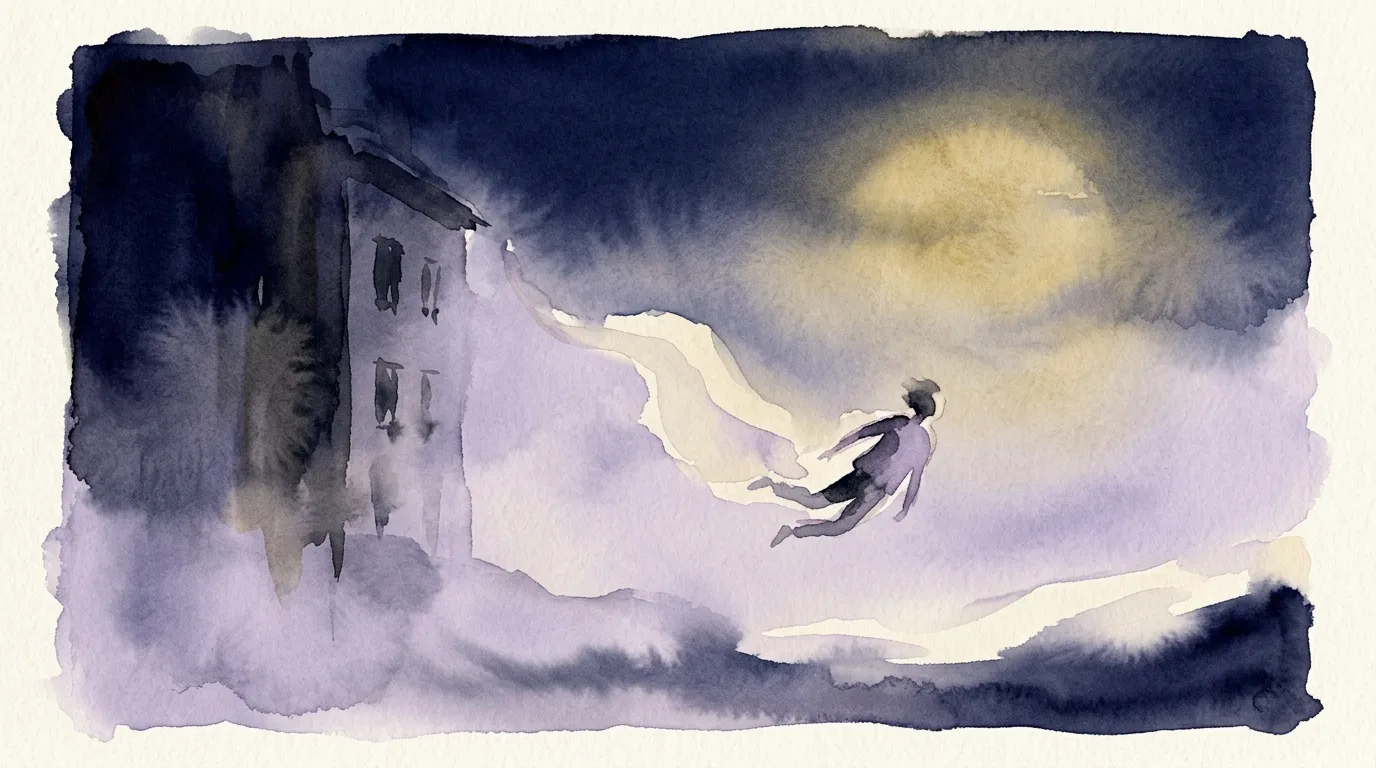
Falling dreams are among the most common dreams people report, and falling from a building is one of the most vivid versions. You’re on a balcony, a rooftop, or a high floor, the ground rushes up, and then you jolt awake. This article covers what falling from a building in a dream may mean, why you often wake up before you hit the ground, and what researchers and interpreters have said about it.
Falling From a Building in a Dream: General Meaning
A building usually stands for status, stability, and the structure of your life, such as your job, your home, or a long-term plan. When you fall from one, the dream often dramatizes a gap between where you feel you should be and how steady things actually feel. The fall itself tends to reflect a sudden sense of losing ground, even if nothing has actually gone wrong yet.
The height matters too. The higher the building, the more exposed the fall feels, which is why people often describe these dreams as stemming from a fear of failure in front of others.
Why Do You Wake Up Before You Hit the Ground?
Most people wake up just before impact, and this is one of the most consistent features of falling dreams. Sleep research connects the falling sensation to the hypnic jerk, also called a sleep start: a sudden, involuntary muscle contraction that happens as you drift off. The Sleep Foundation notes that falling is a common sensation people experience just before a hypnic jerk.
One plausible sequence is that the jolt comes first and the brain builds a falling scene around the physical sensation, then the jolt wakes you at the moment the story peaks. This is a reasonable explanation for why the dream feels most intense right before the landing. It does not mean every falling dream is purely physical, though. Stress and an unsettled mind can shape what the brain builds around that sensation.
Falling From a Building and Career Pressure
For many people, falling from a building connects to work. A high office, a skyscraper, or a rooftop can stand for a role you worked hard to reach, and a fall from it can reflect a worry that the position is less secure than it looks.
This is closely related to imposter syndrome: the sense that your achievements might not be as solid as others assume, and that someone will eventually notice. The dream dramatizes that fear by putting the achievement at a great height and then removing the ground under it.
Jumping Off a Building vs. Falling by Accident
Falling by accident and deliberately jumping feel different in dreams, and interpreters tend to read them differently. An accidental fall often points to a loss of balance: too many commitments, a detail you overlooked, or a situation that slipped out of your hands.
Jumping on purpose usually suggests something else. It can reflect a wish to escape a pressure that feels unbearable, or exhaustion with a situation you feel unable to change from the inside. The dream may not be about wanting to harm yourself. It more often signals that the current situation feels impossible to keep carrying, and that you want an end to it, even if you do not yet know what a different path would look like. If these feelings are strong or persistent, that is worth discussing with someone you trust or a professional.
Being Pushed Off a Building
If another person or a force pushes you, the dream often highlights a sense of being undermined. This can point to a colleague who feels like a rival, a relationship where you feel controlled, or an expectation that others have placed on you without asking how you feel about it.
The key question is who is doing the pushing. Naming that person, or that pressure, is often the most useful step in understanding the dream.
Watching Someone Else Fall From a Building
Watching someone else fall usually reflects helplessness about someone you care about. You can see the danger, but you cannot reach them in time. In some dreams the figure represents an aspect of yourself, such as a creative drive, a confidence, or a part of your life you feel you are neglecting. Think about who the figure is in the dream and what they stand for to you.
Surviving the Fall Without Being Hurt
Landing without serious harm is a less common version, and it tends to be encouraging. It can suggest a sense of resilience: even if a change or failure feels frightening, you may have more inner resources than you expect to handle the outcome.
What Research Says About Falling Dreams
William Domhoff, who spent decades studying dream content, argued that dreams often reflect personal concerns and emotional preoccupations, and that dream content tends to stay continuous with a person’s waking life. In his framework, recurring themes like falling are not random, but they also do not always carry a fixed meaning. Their significance depends on what is happening in the dreamer’s life. Falling also appears among the typical dream narratives in content studies of dream reports, which helps explain why so many people recognize it.
For interpretation, it helps to keep two levels in mind. The physical sensation of falling may come from the sleep transition. The story built around it may reflect the stress and themes of your waking life.
Psychoanalytic and Jungian Readings
Interpreters working in the tradition of Sigmund Freud and Carl Jung have read falling dreams in symbolic terms. Jung’s framework often treats high places and downward movement as connected to the balance between conscious ambition and the unconscious, while Freud’s framework tends to focus on anxiety and repressed feelings. These are interpretive frameworks rather than experimentally tested findings, so it is more accurate to treat them as one way of reading a dream rather than as established science.
Questions to Reflect On
- Which area of your life currently feels like it needs more support than it gets?
- Are you holding yourself to a standard that makes ordinary mistakes feel like a catastrophic drop?
- Who or what in the dream was doing the pushing or pulling, and what does that mean for your waking life?
- Where might you need to step back from the edge before outside pressure forces the decision?
Sources
- Domhoff, G. W. (2003). The scientific study of dreams: Neural networks, cognitive development, and content. American Psychological Association. Available online at dreams.ucsc.edu.
- Domhoff, G. W. (2000). Methods and measures for the study of dream content. In M. Kryger, T. Roth, & W. Dement (Eds.), Principles and Practice of Sleep Medicine, Vol. 3 (pp. 463–471). Available online at dreams.ucsc.edu.
- Sleep Foundation. Dream interpretation. https://www.sleepfoundation.org/dreams/dream-interpretation
Frequently Asked Questions
Why do I wake up right before hitting the ground in a falling dream?
Most people wake just before impact. Sleep research links the falling sensation to hypnic jerks, sudden muscle contractions at the start of sleep, so the body's jolt often wakes you at the moment the dream reaches its peak.
Can falling from a building mean imposter syndrome or work stress?
It can. Tall buildings often stand for status or achievement, so a dream of falling from one may reflect a worry that your position feels less stable than it looks from the outside.
What does it mean if I jump instead of falling by accident?
Jumping on purpose usually points to wanting to escape a situation that feels unbearable. It often reflects exhaustion with a pressure you feel you cannot change from the inside.