Crying in a Dream: Meaning of Tears, Grief & Relief
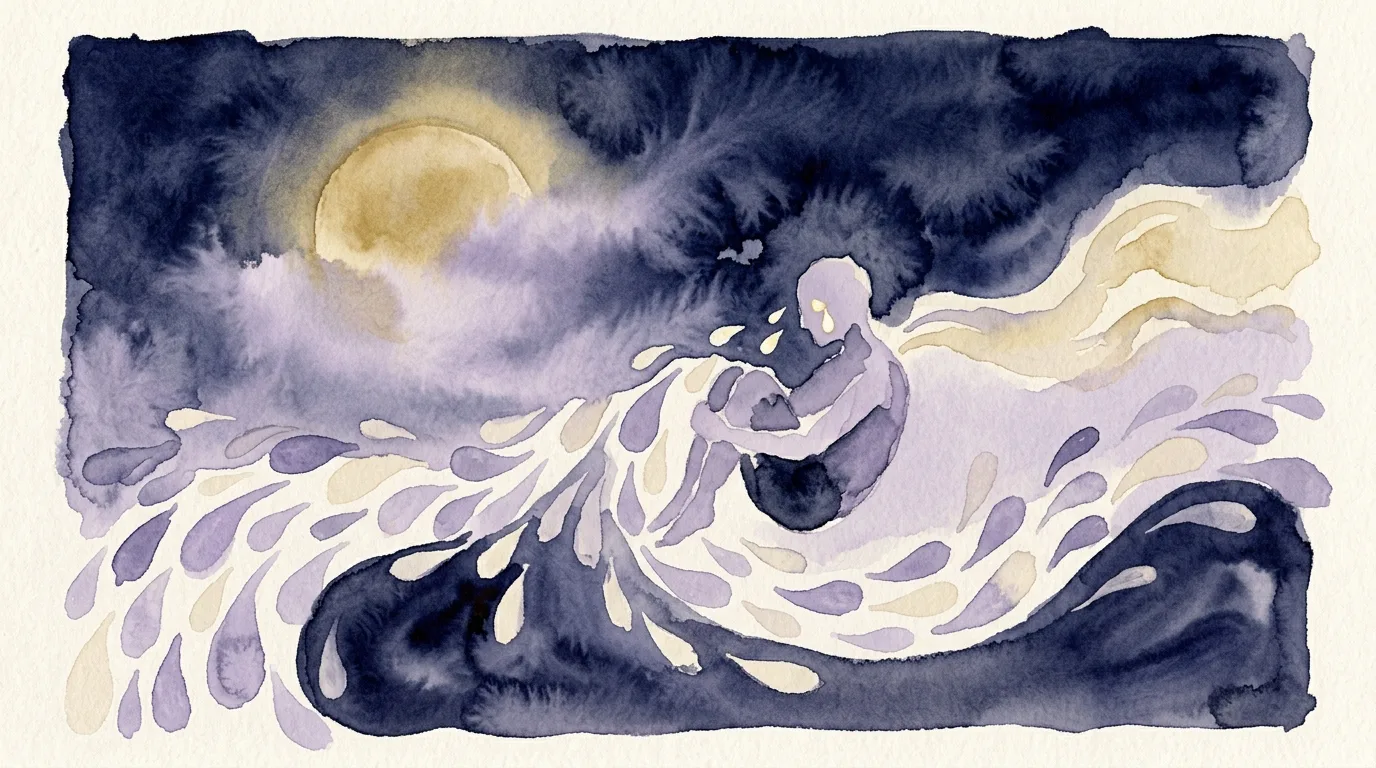
Crying in a dream can feel strangely real. You wake up with a heavy chest or wet cheeks, and the sadness lingers long after the scene fades. This article covers what tears in a dream may mean, how different crying scenarios change the message, and what dream research and interpretive traditions have to say about it.
Crying in a Dream: General Meaning
Crying in a dream is usually linked to emotions that were not fully expressed during the day. The tears can represent grief, sorrow, regret, or a pressure that built up while you kept things together. Because sleep lowers many of the defenses you use when you are awake, feelings that were pushed aside can surface in the form of tears.
Water and tears often stand for the flow of emotion. A dream that centers on crying may be asking whether you have made space to feel what you have been carrying, rather than predicting a misfortune. Many interpreters read these dreams as a sign of release and a chance to become clearer about what hurts.
Crying Uncontrollably in a Dream
Sobbing loudly or being unable to stop crying often points to a point where stress has reached its limit. If you have been holding a calm face for other people, this kind of dream can suggest that you need permission to feel vulnerable, and perhaps support from someone you trust.
Watching Someone Else Cry
Seeing another person cry usually reflects empathy, or tension between you and that person. Sometimes the figure represents a part of yourself that feels hurt and has not been comforted. Ask who the person is and what they are going through, because the answer often points to what the dream is trying to show you.
Tears of Joy or Relief
Crying out of happiness or relief tends to be one of the more positive crying dreams. It can reflect the end of a long struggle, a decision that finally feels right, or a moment of acceptance. This version suggests emotional release that comes with resolution rather than with loss.
Being Unable to Cry
Feeling deep sorrow in a dream without being able to shed a single tear is a distinct experience. It may point to emotional numbness, a habit of holding feelings at a distance, or a fear of what might happen if you let go. Some people describe this as a dream of wanting to cry and not being able to, which can be a signal that the feeling is still there but has no safe outlet yet.
Crying in a Dream and Suppressed Grief
Many people dream about crying during a period of mourning, even when they have been functioning normally in daily life. The dream can be the mind’s way of making room for grief that the waking routine has not allowed. If you have recently lost someone, or a relationship has ended, tearful dreams are a common and understandable response.
What Dream Research Says About Emotions in Dreams
Early content analysis by Hall, cited in Domhoff’s work, found that most explicitly expressed emotions in a sample of 1,000 home dream reports were negative or unpleasant, while only a minority were happy. In this view, dreams are not mainly places of joy. They tend to replay concerns and emotional preoccupations, and crying is one of the clearest ways these concerns show up. This also fits Domhoff’s continuity idea, which holds that dream content generally reflects waking concerns.
Sleep research adds another piece. Walker and van der Helm (2009) proposed that REM sleep helps the brain process emotional experiences, and that this processing may reduce the emotional intensity of memories over time. Their model is a hypothesis about how sleep supports emotional regulation, not a confirmed explanation of why any particular dream includes tears. It does give a plausible reason why emotional material so often appears in dreams during REM periods.
Psychological and Jungian Readings
Interpreters working in Jung’s tradition often read emotional dreams as a way for the unconscious to balance a waking attitude that has become too rigid or too detached. In that framework, tears can be a sign that the psyche is restoring emotional contact. These are interpretive frameworks rather than experimental findings, so they are best treated as one lens among others.
Questions to Reflect On
- What feeling was the strongest in the dream, and does it match anything you have been holding during the day?
- Who was crying, and what does that person represent to you?
- Is there a burden you have been carrying without giving yourself permission to grieve, rest, or ask for help?
- If the tears felt like relief, what has changed that made relief possible?
If sadness from dreams or waking life feels heavy or persistent, talking with a trusted person or a qualified professional can help. Dreams can point to what hurts, but they are not a substitute for that support.
Sources
- Domhoff, G. W. (2005). The content of dreams: Methodologic and theoretical implications. Available online at dreams.ucsc.edu.
- Domhoff, G. W. (2003). The scientific study of dreams: Neural networks, cognitive development, and content. Available online at dreams.ucsc.edu.
- Walker, M. P., & van der Helm, E. (2009). Overnight therapy? The role of sleep in emotional brain processing. , Psychological Bulletin, 135(5) 731–748.
Frequently Asked Questions
Why do I wake up crying after a dream?
Some people wake with tears after an intense dream. Research has not established a single cause, but a strongly emotional dream can carry its feeling into waking, and this is more likely when you are already under stress or grieving.
What does it mean to see a stranger crying in a dream?
A crying stranger is often read as a part of yourself that feels neglected or hurt. Interpreters also suggest it can reflect empathy for someone in your life who is struggling.
Is dreaming about crying a bad sign?
Not in itself. Most interpretations treat tears in dreams as emotional release rather than a warning of bad events, although the situation around the tears can point to something worth paying attention to.